
In the quest for the elusive 90-degree jawline, we often blame skin and fat. But for the elite facial surgeon, the secret to an elegant contour lies deeper—in the placement of the hyoid bone.
When we talk about facial aging, we tend to speak in terms of surface area: a little too much stuff under the chin, a bit of slack along the jaw. We’ve been conditioned by a decade of marketing to believe that if we just freeze, fill, or dissolve enough of the superficial layers, we’ll achieve that razor-sharp profile seen on the runways of Paris or the feeds of the naturally snatched.
But biology is rarely that simple. As a medical journalist covering the intersection of high-end aesthetics and human anatomy, I’ve learned that the most frustrating failures in neck rejuvenation aren't usually technical, they are architectural.
At the center of this structural drama is the hyoid bone.
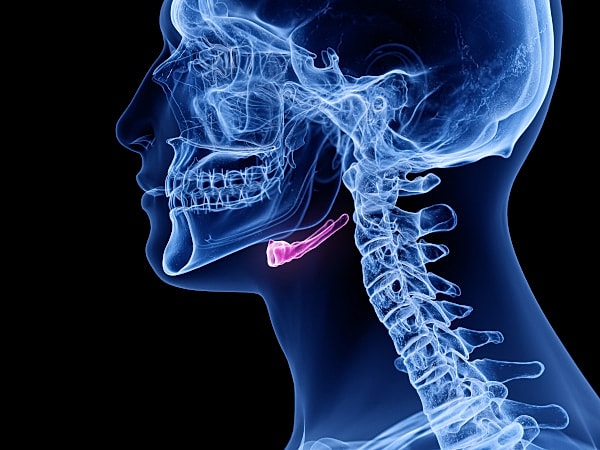
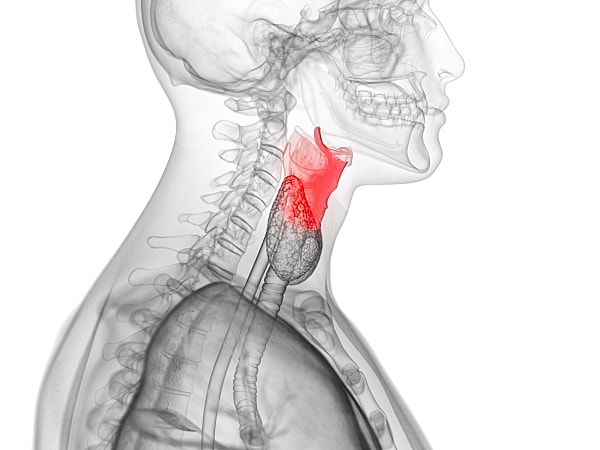
Unlike every other bone in your body, the hyoid doesn't connect to another bone. It is a horseshoe-shaped wanderer suspended in the upper neck by a web of muscles and fascia. It serves as the anchor for your tongue and the mechanical engine for swallowing.
Aesthetically, the hyoid is the pillar of the tent. Its position, how high it sits toward your jaw and how far back it sits toward your spine, dictates the cervicomental angle, that critical slope where the neck meets the chin.
| At A Glance | The Hyoid Factor |
| The Goal | A sharp, defined cervicomental angle |
| The Constraint | Bony anatomy (Hyoid height/depth) |
| The Solution | Deep Neck Lift + Structural Optimization |
| Recovery | Tightness and soreness like a post-workout ache |
In my discussions with Dr. Raghu Athré, a Houston-based surgeon known for his architectural approach to the face, the hyoid is the first thing he looks at during a consultation. It’s a moment of radical honesty that most medspa injectors skip.
If you were born with a hyoid bone that sits high and tucked back, you’ve won the genetic lottery for aging. Even as your skin loses elasticity, your pillar remains high, keeping the neck fabric taut. For these patients, a Deep Plane Facelift yields those transformative, 90-degree angles that look filtered in real life.
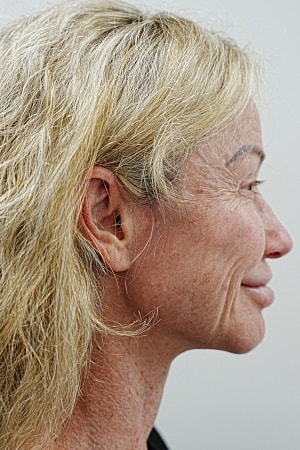
If your hyoid sits lower or more forward (anterior), your neck will naturally have a more obtuse, heavier slope. This isn't a matter of weight, it's a matter of frame. You could be at your goal weight and still feel you have a short neck. Historically, these patients were told a facelift wouldn't work for them.
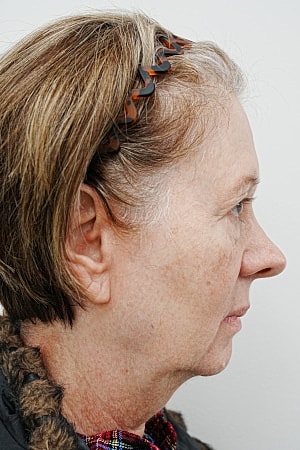
A common misconception is that a facelift is just about pulling skin. However, a Deep Neck Lift addresses the actual contributors to aging: the platysma, subplatysmal fat, and the digastric muscles.
But even the most comprehensive surgery cannot change who you are anatomically. The hyoid bone itself is not routinely repositioned in aesthetic surgery. Instead, the goal of deep neck surgery is to optimize the surrounding anatomy, reducing subplatysmal fullness and managing fascial planes, to achieve the best possible contour within your existing structural framework.
While we don't move the bone itself, we can modify the forces acting upon it. The hyoid is suspended by both suprahyoid and infrahyoid muscles, which exert vertical and anterior tension.
In carefully selected cases, Dr. Athré may perform a selective release of specific infrahyoid muscles (most commonly the sternohyoid and omohyoid). This maneuver reduces the inferior and anterior tethering of the hyoid–laryngeal unit. It doesn't reposition the bone in a skeletal sense, but it allows for a subtle improvement in the neck contour by decreasing the downward pull on the central neck structures. Because these muscles are vital for swallowing and phonation, this requires a surgeon with deep familiarity with central neck anatomy.
The Deep Plane Facelift is designed to reposition deeper facial tissues to restore balance between the face and neck. Yet, the hyoid remains the baseline setting for what is achievable.
"I often tell my patients that the most refined results occur when technique and anatomy are aligned, never forced," Dr. Athré explains. A thoughtful evaluation must include an assessment of hyoid height, mandibular projection, and deep central neck fullness. Achieving an ideal angle is frequently governed by the relationship between skeletal support and these hyoid-related variables.
Because this work is structural, the recovery is more of a reset than a refresh. You won't just feel a sting, you’ll feel a profound tension, a soreness like a gym workout in muscles you didn't know you had.
At Athré Facial Plastics, the magazine-ready recovery is accelerated by the ElixirMD Recovery Program. By using Hyperbaric Oxygen and specialized IV nutrients, the internal foundation repair heals with less of the chronic swelling that can often blur the results of a standard lift.
The move toward Regenerative Aesthetics in 2025 means moving away from the one-size-fits-all pull. An elegant neck isn't achieved by fighting your anatomy, it’s achieved by a surgeon who understands how to optimize it.
If you are seeking a profile that looks timeless rather than operated, the conversation has to start beneath the surface. It has to start with the architecture of the hyoid.
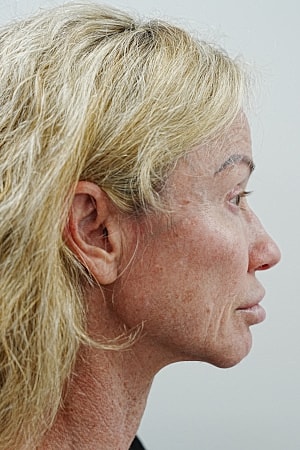
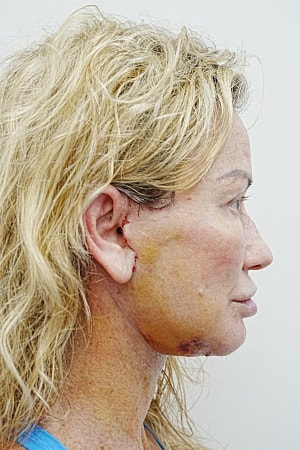
Before and after patient with high hyoid position
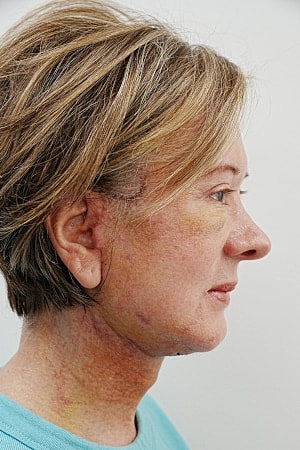
Before and after of patient with low hyoid position
Are you a candidate for a structural reset? Schedule a private architectural audit at Athré Facial Plastics in Houston.